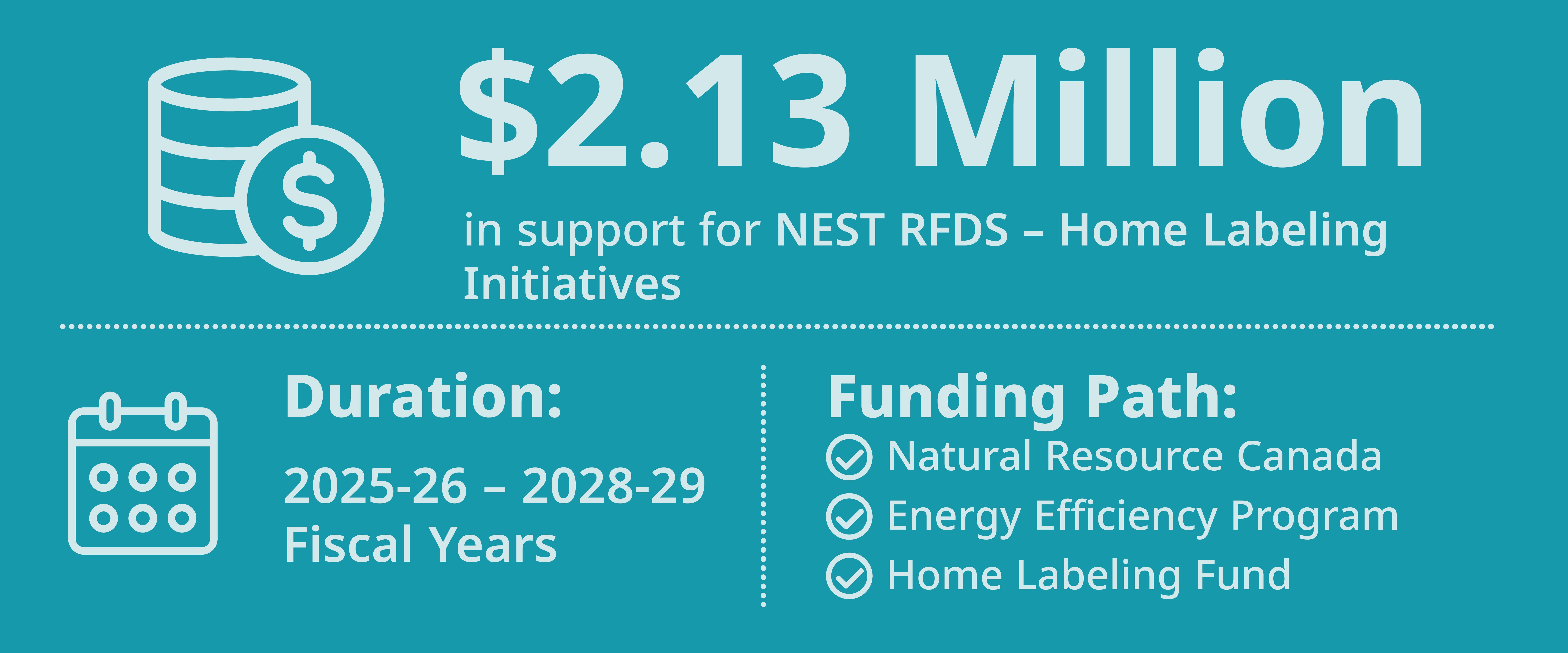
The Climate Change Secretariat (CCS) has received $2.13 million in funding through Natural Resources Canada’s (NRCan) Home Labelling Fund (HLF) to support the development of programming that will help Nunavummiut understand their home’s energy demands and options that can lead to cost savings.
While the HLF funds are dedicated to helping Nunavummiut better understand and manage residential energy use, CCS’s proposal, Nunavut Energy & Shelter Technology – Research Facility Demonstration Sites (NEST-RFDS), explains how this work connects to a broader network of energy projects across Nunavut. Through projects with communities and partners, CCS will help move energy solutions from planning to action and support future program development based on Northern needs and real Nunavut experience.
Home labelling is NRCan’s national approach to putting energy efficiency in the hands of residents. However, in Nunavut, we have learned from historic experiences that we need to take an innovative approach as the availability and cost of energy auditors and audits can be cost prohibitive.
Through this funding CCS will coordinate and initiate pilot home labelling projects across Nunavut identifying pathways to scalable approaches. We encourage Nunavummiut to engage with us so we can continue to meet our communities where they are and share ideas across the territory.
Core activities supported through this funding include:
- Virtual home energy assessments
- Energy monitoring and related support programs
- Community capacity building
- Interactive demonstration sites
- Web-accessible tools and dashboards
These activities will generate data and insights that we aim to keep accessible over time. This will help identify solutions that improve energy affordability and reliability, while supporting continuous learning and real-time program improvement.
The initiative supports collaboration between communities, Inuit organizations, researchers, industry, and governments, ensuring that solutions reflect local priorities and contribute to long-term capacity building.
Visit the NEST–RFDS page to learn more, stay up to date, and get involved.