Arctic Sea Ice is Changing: What That Means for Nunavut
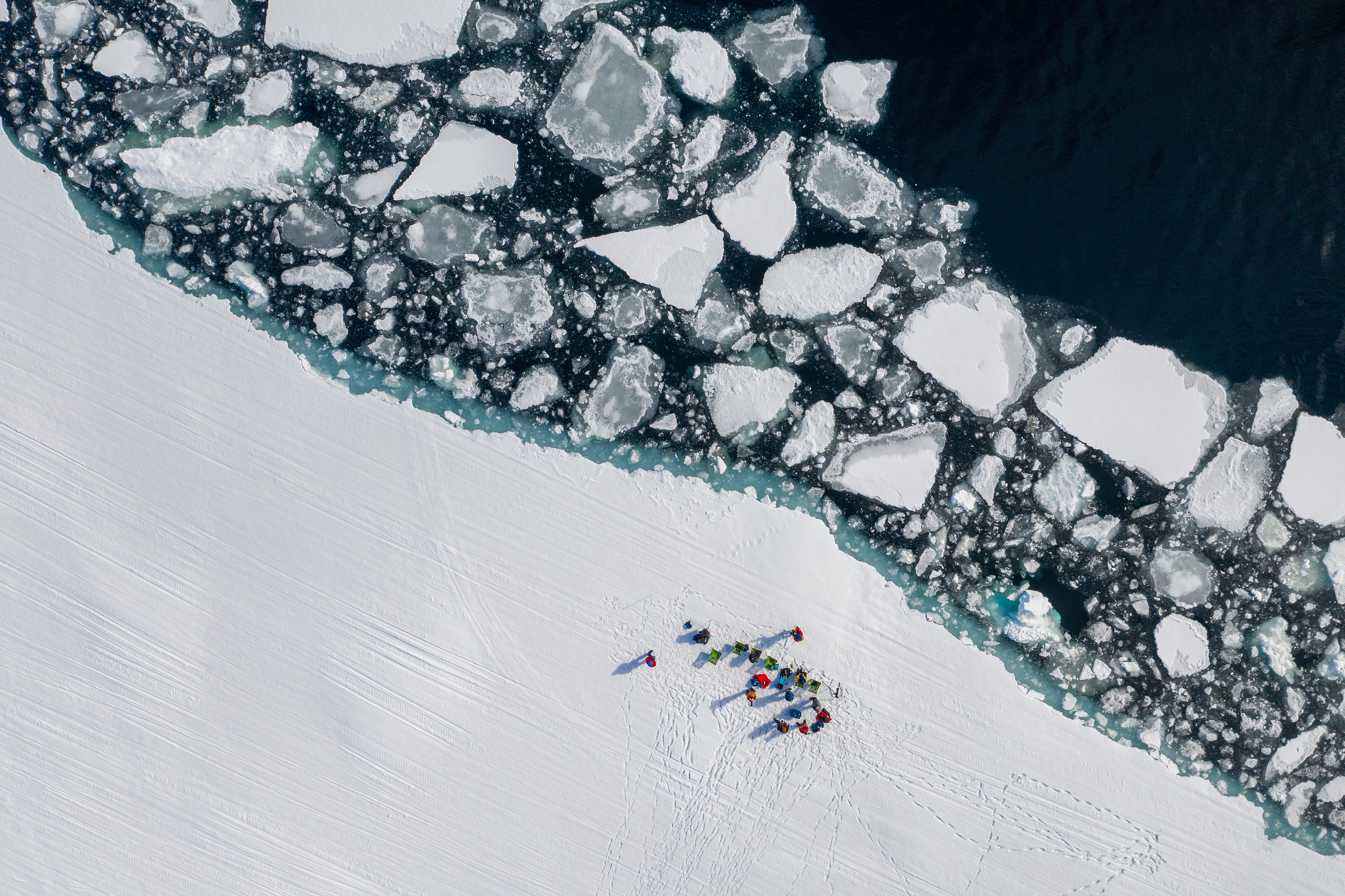
In Nunavut, sea ice plays an important role in the lives of Nunavummiut. It supports Arctic wildlife, creates travel routes to harvesting areas and other communities, and helps regulate the global climate.
Sea ice is understood through Inuit Qaujimajatuqangit (IQ). For generations, Inuit have observed changes in ice, snow, weather, wildlife, tides, currents, and travel conditions. Using these observations to make decisions about safe travel, harvesting, and time spent on the land and ice reflects important IQ principles, including Inuuqatigiitsiarniq—respecting others, relationships, and caring for people—and Avatittinnik Kamatsiarniq—respect and care for the land, animals, and the environment.
As the Arctic continues to warm due to human-caused climate change, sea ice is declining over the long term. It is also becoming thinner, younger, and less predictable. These changes matter both locally and globally. In Nunavut, this is affecting wildlife, harvesting, travel conditions, and access to important places. Globally, changes to sea ice influence how much sunlight the Earth reflects and affect parts of the ocean-climate system.
Why Does Arctic Sea Ice Matter?
Sea ice shapes how people travel, harvest, and access important places. It provides habitat for wildlife, supports harvesting and food security, and creates travel routes to harvesting areas and, in some regions, between communities.
When sea ice is reliable, people can more safely access hunting and fishing areas. When ice becomes thinner, forms later, breaks up earlier, or becomes less predictable, travel can become more difficult and access to country food can change.
Because conditions vary by location, season, weather, currents, tides, and local geography, Inuit Qaujimajatuqangit and local observations are essential for understanding where travel may be safer and how conditions are changing over time.
Beyond Nunavut, sea ice also plays an important role in the global climate system. Its bright surface reflects sunlight, helping keep the Arctic cooler. it also affects how ocean water moves. When the ocean freezes, it pushes salt into the water below, making it heavier. This heavier water can sink and help drive ocean currents that move heat around the planet.
How Climate Change is Changing Arctic Sea Ice
The Arctic is warming faster than many other parts of the world, and sea ice is changing in ways that are already being observed by Inuit across the Arctic.
In the 2005 report Unikkaaqatigiit: Putting the Human Face on Climate Change (Nickels et al., 2005), Inuit participants described thinner ice, later freeze-up, earlier break-up, and rougher travel conditions. In Nunavut communities such as Kugaaruk, Naujaat, and Arctic Bay, these changes affected everyday decisions about travel, harvesting, and safety. For example, early break-up in Naujaat made travel unsafe at times when it was once possible, while thinner ice in Arctic Bay required greater caution when pursuing animals.
These observations show that sea ice change is not only about how much ice exists. It is also about how ice behaves in places people depend on. Changes in timing, thickness, and reliability can affect when people travel, which routes they use, and how safely they can access harvesting areas.
Melting sea ice also contributes to a process called Arctic amplification. Bright sea ice reflects sunlight, helping keep the Arctic cooler. When sea ice melts, it exposes darker ocean water, which absorbs more heat from the sun. This added heat can lead to more warming and more melting, creating a cycle that speeds up climate change in the Arctic.
Together, Inuit observations and climate science show that sea ice change affects both daily life in Nunavut and the global climate system.
What Changing Sea Ice Means for Safety and Travel
Changes to sea ice affect everyday decisions for people who travel, harvest, or spend time on the land and ice. Later freeze-up, earlier break-up, and less predictable conditions can change when travel is safe and which routes can be used. Routes that were once reliable may now need to be checked more often or adjusted.
Safe travel depends on many types of knowledge. Inuit Qaujimajatuqangit, local observations, community updates, weather forecasts, satellite tools, GPS, SIKU, and communication devices all help people make informed decisions. Preparation, experience, and community knowledge remain essential.
Before heading out, Nunavummiut are encouraged to check local conditions, speak with experienced travellers or hunters, use available tools, travel with appropriate equipment, share their plans, and carry reliable communication devices. These steps, together with local knowledge and Inuit observations, can help people make informed decisions on changing sea ice.
Arctic Sea Ice Day 2026
Residents of Iqaluit are invited to attend a free screening of The Last Ice at the Astro Theatre on Saturday, July 18, at 2:00 p.m.
Nunavummiut outside of Iqaluit are also invited to share a photo showing what sea ice means to them for a chance to win a prize. Photos can show travel, harvesting, wildlife, family, community activities, or time spent on the ice. Photos can be entered by posting on social media and using the hashtag #ArcticSeaIceDayNU2026 or by emailing them to climatechange@gov.nu.ca.
The deadline to submit is July 31, 2026.
All entries must be your own original photo and cannot be AI generated or made by anyone else.
Source note
Some Inuit observations in this article are drawn from Unikkaaqatigiit: Putting the Human Face on Climate Change – Perspectives from Inuit in Canada, a 2005 report based on workshops with Inuit communities across the Canadian Arctic, including Nunavut workshops in Kugaaruk, Naujaat, and Arctic Bay.